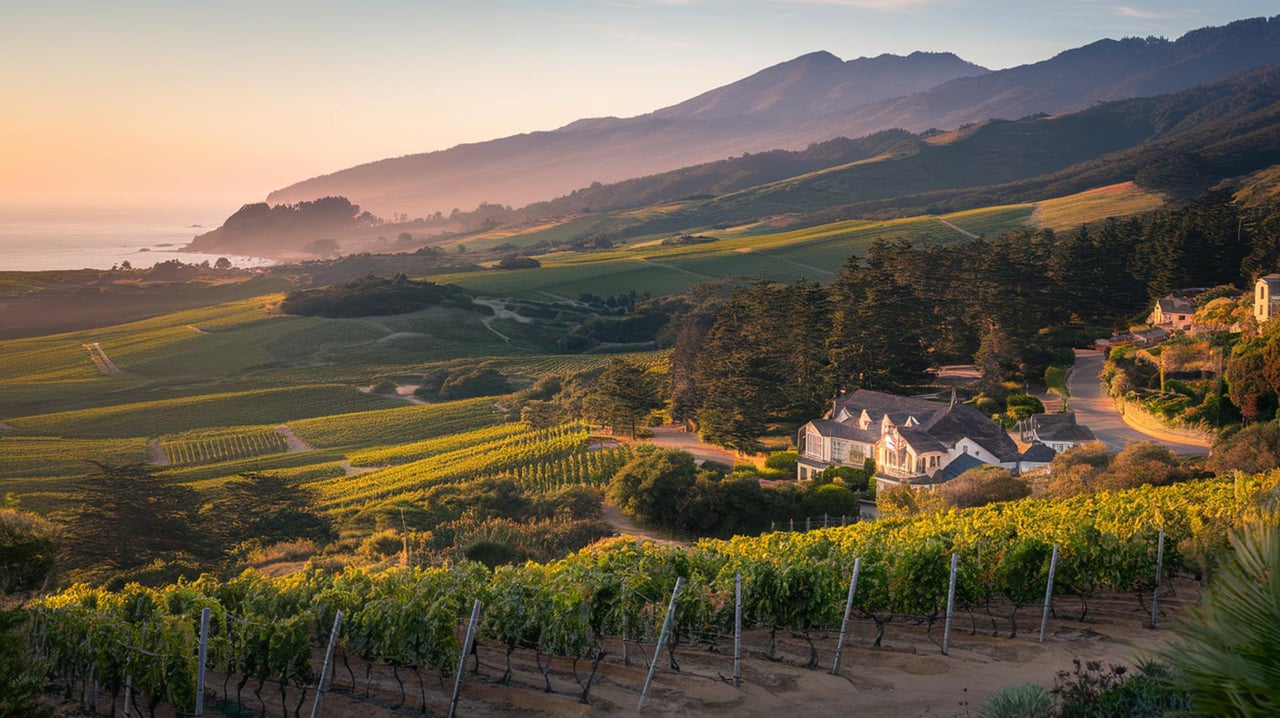
Drive Carmel Valley Road on a warm afternoon this week and you will catch it before you see it: a faint, sweet, almost yeasty note drifting from somewhere past the horse ranches, the kind of smell that usually does not show up until deep September. That is not your imagination, and it is not early because someone got ambitious with a calendar. The 2026 harvest in Carmel Valley arrived weeks ahead of its normal pace, and by most accounts it arrived smaller too. If you live here, that combination is worth understanding, because it changes what the next six weeks actually look like on your own road.
The Valley Jumped the Calendar
Most descriptions of Carmel Valley wine season default to a tidy script: September and October are harvest, everything before that is anticipation. This year broke that script. Russell Joyce of Joyce Family Wines told Edible Monterey Bay in late July that his Arroyo Seco fruit sources were moving fast, with Gamay destined for rosé expected off the vine within days, and Albariño and Sauvignon Blanc close behind. Last year, he picked those same grapes on August 25. This year, he was on track to pick them roughly a month sooner.
Joyce's read on why was simple. He described this year's crops as "very light," the kind of small, concentrated yield that ripens fast and does not wait around. He expected his Santa Lucia Highlands fruit to come in by late August, right about now, and said he planned to start picking Carmel Coast AVA grapes, specifically the Albatross Ridge Chardonnay and Pelio Pinot Noir he sources, in early September, a schedule that would have looked unusually early even five years ago.
The early start was not confined to one winemaker's rows. Miguel Lepe of Lepe Cellars picked up a new project this season too, sourcing fruit from a vineyard in the Santa Lucia Highlands still settling into a new identity: what used to be called Rancho Rustica is now known as Cortez Vineyard, where two clones of Pinot Noir were planted back in 2016 by the property's prior owner, Robert Mann. It is a small detail, but it is the kind of detail that tells you something a generic wine country roundup will not: the valley's map of who is growing what, and where, keeps shifting under the surface even in a single vintage.
What a Light Crop Actually Means for the Rest of the Season
A light harvest is not just a smaller number on a spec sheet. It changes the rhythm of the season for anyone paying attention on the ground. Smaller crop loads generally ripen and get picked faster, which is part of why Joyce's timeline compressed the way it did. That means the visible, sensory parts of harvest, the trucks moving fruit at dawn, the smell of must at the crush pad, the winemakers who suddenly have less time to chat because they are watching sugar levels twice a day, are likely to be concentrated into a shorter window this year rather than spread lazily across ten weeks.
For residents, that has a practical texture. If you are used to catching the crush smell on your evening walk sometime in late September, this year it may already be behind you by the time the calendar says so. If you like popping into a tasting room specifically because harvest makes the pours feel like an event, the smaller window means your odds are better in the next few weeks than in October, when several producers may already be through their most active picking.
It is also, quietly, the kind of year winemakers tend to talk about for a long time afterward. A light, early, fast-moving vintage produces a different story in the glass than a big, drawn-out one, and the valley's small-lot producers, the ones you can still walk right up to at a bar and ask "how's this year going," are exactly the ones who will have an answer worth hearing right now.
Where the Valley Is Actually Living This Right Now
Carmel Valley Village remains the easiest place to feel this in person. Along a walkable stretch of just a few blocks, more than twenty tasting rooms sit close enough together that you can park once and move on foot from producer to producer, which matters more than usual this year if you want to catch several winemakers mid-harvest rather than after the fact.
Folktale Winery, set on fifteen acres along the Carmel River, is currently telling visitors on its own site that harvest season has arrived, the kind of message that lines up with exactly the compressed picking window described above. Their Vineyard View space is open daily and reservations are recommended if you want a seat during what is shaping up to be a busier-than-usual stretch of late summer.
Boete Winery, known for its 100 percent estate-grown Carmel Valley Cabernets, keeps a smaller, steadier rhythm going through the season with its Wednesday Wine Down, held on the last Wednesday of each month at The Barrel Room, pairing a glass of wine, sparkling or beer with a guided art project and a plate of savory bites. It is a low-key way to check in on the season without needing an appointment or an agenda.
If you want the valley's harvest energy poured all in one place, the producers doing this work travel down the road for one evening too. Taste of Carmel returns October 1 to the historic Carmel Mission Basilica in Carmel-by-the-Sea, where bites from dozens of area restaurants share the courtyard with pours from wineries including Folktale, Bernardus, Galante Vineyards, Corral Wine Co. and Lepe Cellars. Past years have drawn a wide swath of the valley's own producers out to the coast for one night, which makes it one of the more efficient ways to hear directly from the people who just spent six weeks racing a light crop through the press.
A few names worth knowing as you make your own rounds this season, whether on foot in the Village or out along the road toward the estates:
- Joyce Family Wines, for the clearest window into how fast and light this particular vintage is running
- Lepe Cellars, now working fruit from the newly named Cortez Vineyard in the Santa Lucia Highlands
- Folktale Winery, for the most visible harvest programming along the river
- Boete Winery, for a smaller monthly rhythm that runs all season
- Bernardus, Cowgirl Winery and Georis, three of the longer-standing anchors of the Village tasting circuit
A Valley That Rewards Paying Attention
The version of Carmel Valley most visitors get is the postcard one: golden hills, three hundred sunny days, wine that tastes like the place it came from. What the valley's own winemakers are describing this year is something a little more specific and a little more fleeting, a vintage that showed up early, came in small, and is moving through the presses faster than the calendar suggests it should. If you already call this valley home, that is not trivia. It is a reason to take the walk this week instead of waiting for the smell to arrive on schedule, because this year, it already has.
If you are weighing what a home in a valley like this is actually worth, not just this season but for the long stretch of seasons ahead, Meza Properties knows this ground the way its winemakers know their rows. Start Your Home's Bespoke Launch when you are ready to talk about it.