Is Now the Right Time to Sell Your Carmel Home? What the 2026 Market Data Says
The Carmel-by-the-Sea real estate market has always operated by its own rules — constrained supply, high-net-worth buyers, and a lifestyle proposition that transcends spreadsheets. But 2026 brings a set of conditions that sellers should assess carefully before deciding when and how to list.
Here's a data-driven look at where the market stands, what's driving demand, and what it means if you're considering selling.
The Numbers: Where Prices Stand Today
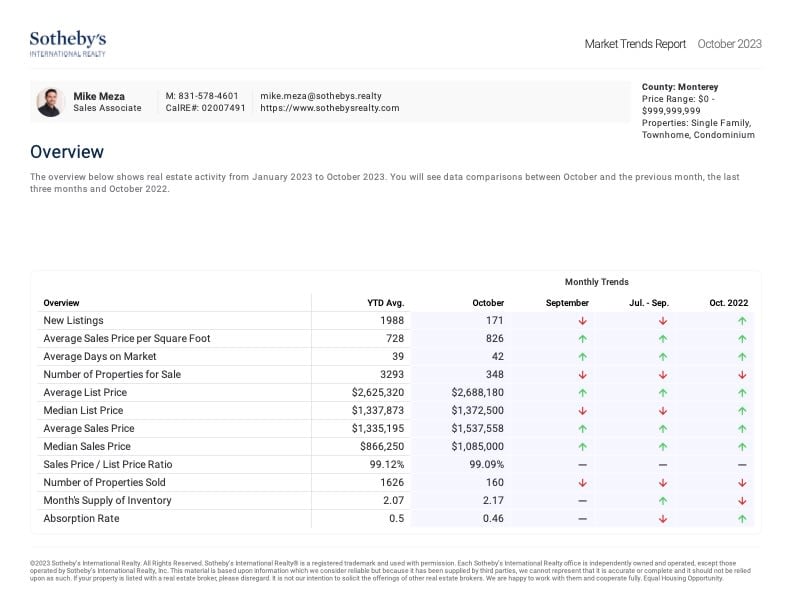
The headline figures require some context. Redfin's January 2026 data shows median sale prices for Carmel-by-the-Sea transactions around $2.1M, with year-over-year comparisons appearing dramatically negative. However, this reflects the thin transaction volume typical of Carmel — just four homes sold in January — making percentage swings in any single month more statistical noise than meaningful signal.
Zooming out gives a cleaner picture:
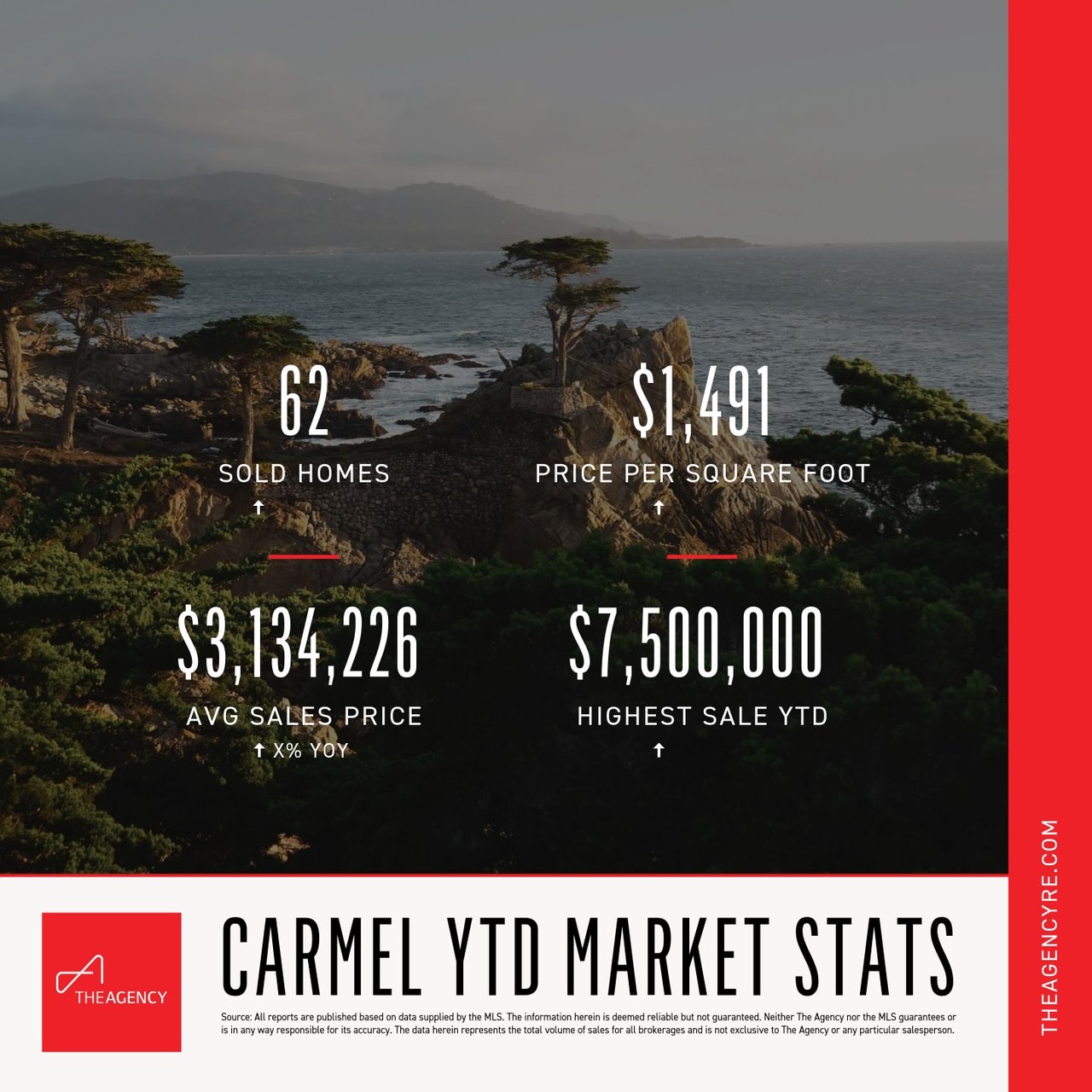
- Zillow's Home Value Index pegs the average Carmel-by-the-Sea home value at $2,280,971, up 0.8% over the past year — modest but positive appreciation.
- Movoto reports a median list price of $2,995,000 as of early 2026, with homes averaging 143 days on market (down from 156 days the prior year).
- ATTOM Data puts the trailing twelve-month median sale price at $1,975,000 across 391 transactions, with an average home footprint of 2,161 sq ft.
- Carmel Woods, one of the area's more established luxury enclaves, saw median sale prices reach $3.0M in January 2026 — up 14.6% year-over-year.
The takeaway: the market is not moving uniformly. Well-positioned, move-in-ready properties in desirable sub-neighborhoods are still commanding premium prices and meaningful appreciation.
Days on Market: Patience Is Now Part of the Strategy
One metric every seller should track closely is time on market. The Carmel market is absorbing properties more slowly than it did during the peak years of 2021–2022, and that shift has real implications for pricing strategy.
Current days-on-market figures range from roughly 52 days (Redfin, Carmel-by-the-Sea proper) to 142–143 days (Movoto's broader Carmel area data). The spread reflects differences in methodology and geography, but the direction is consistent: buyers are taking more time to transact, and sellers should price accordingly from day one rather than relying on rapid price escalation.
Homes that require price reductions extend their market time significantly — and in a prestige market, extended time on market can erode perceived value. Working with an agent experienced in the Carmel luxury segment to calibrate an accurate initial list price is more important than ever.
What's Driving Demand — and Why It's Structural
The demand for Carmel real estate isn't purely cyclical. Several structural factors continue to underpin the market, and sellers can point to these with confidence when positioning their property.
Constrained inventory. Carmel-by-the-Sea has no street addresses and strict architectural controls. New construction is effectively non-existent within the village core. This means every property that sells is genuinely irreplaceable — a compelling argument for buyers who understand supply dynamics.
Remote work and lifestyle migration. The shift toward flexible work arrangements has been a durable tailwind for coastal lifestyle markets. Buyers from the Bay Area, Los Angeles, and Seattle continue to search for Carmel properties — Redfin migration data confirms San Francisco, LA, and Seattle as the top three feeder markets. These buyers are often equity-rich and rate-insensitive, which matters in an environment where mortgage rates remain in the mid-to-high 6% range nationally.
Luxury investment thesis. Limited supply of high-end properties ensures that demand remains structurally elevated for well-positioned listings. For buyers treating Carmel real estate as a store of value or generational asset, the scarcity premium is part of the appeal — not a deterrent.
The Broader California Context
California's statewide market in 2026 is characterized by stability rather than volatility. The California Association of REALTORS® projects the statewide median price rising approximately 3.6%, with modestly higher sales activity than 2025 — signs of a market normalizing after years of rate-driven disruption.
Mortgage rates are expected to hold in the low-to-mid 6% range for 30-year fixed loans. While this is elevated compared to the sub-3% environment of 2020–2021, it has become the market's equilibrium. Buyers have adjusted their expectations; deals are getting done.
For Carmel sellers, the implication is that demand from cash buyers and buyers with significant equity is relatively insulated from rate movements. The buyers most active in the $2M–$5M+ segment are rarely rate-constrained.
Strategic Considerations for Sellers in 2026
Given the data, here's what sellers should weigh:
Price at market, not at aspiration. With longer average days on market, the penalty for overpricing is steeper. Comparable sales analysis specific to your sub-neighborhood and property type is essential.
Presentation matters more than ever. In a market where buyers are taking 52–143 days to transact and often comparing across multiple coastal luxury markets, staging, professional photography, and any deferred maintenance investments have an outsized return on investment.
Timing the season strategically. Carmel's market tends to see increased activity in spring and early summer as lifestyle buyers from urban centers reconnect with the area. Listing ahead of this window — February through April — can maximize qualified buyer exposure.
Understand your buyer. The data shows significant inbound interest from San Francisco, LA, and Seattle. A marketing strategy that specifically targets high-net-worth buyers in those metros, including digital campaigns and outreach through luxury real estate networks, will outperform a purely local approach.
Bottom Line
The Carmel real estate market in 2026 is not a seller's market in the conventional sense — it's a seller's market for the right property, priced correctly, marketed to the right audience. The structural foundations remain strong: irreplaceable inventory, affluent inbound migration, and a lifestyle proposition with no real substitute.
Sellers who enter this market with accurate data, a disciplined pricing strategy, and a buyer-centric marketing approach are well-positioned to achieve strong outcomes. Those who approach it with 2021-era expectations may find the experience more challenging.
If you're considering listing your Carmel property in 2026, a detailed comparative market analysis and a conversation about timing will give you a far clearer picture than any headline number can.
Data sources: Zillow Home Value Index (January 2026), Redfin MLS data (January 2026), Movoto market trends (January–March 2026), ATTOM Data Solutions (January 2026), California Association of REALTORS®.