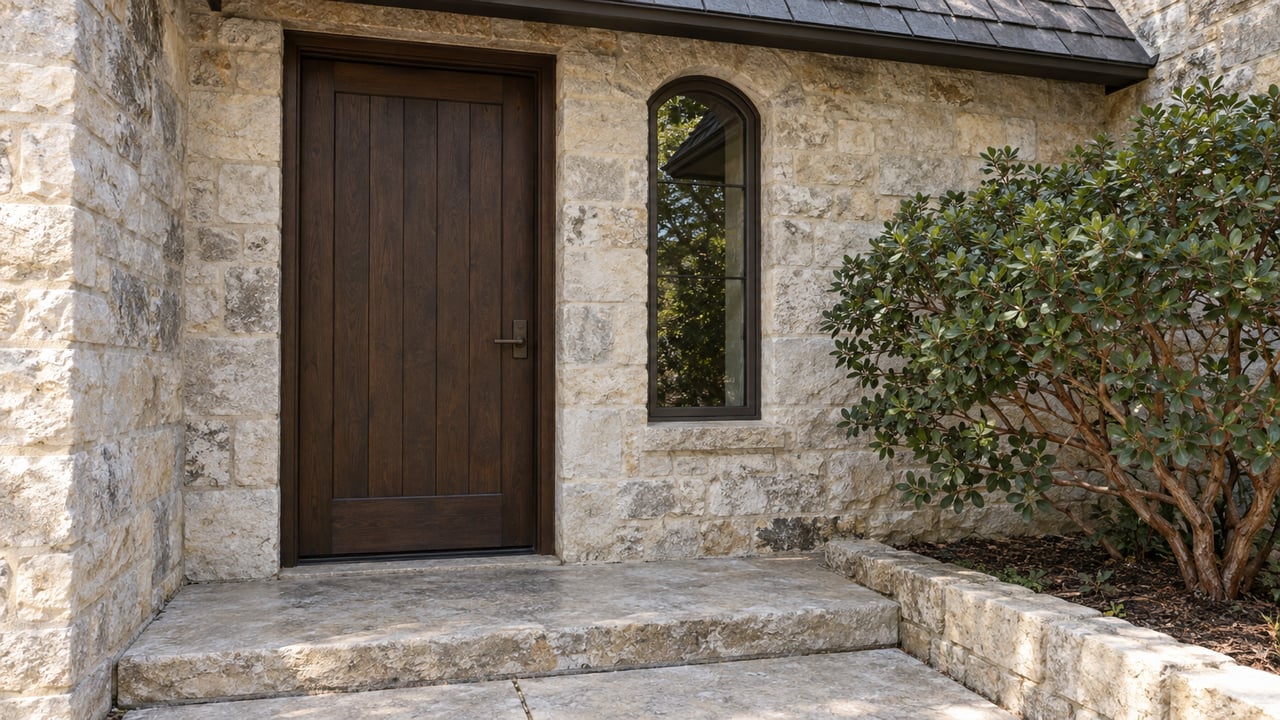
Carmel-by-the-Sea Has House Numbers Now. It Still Runs on House Names.
October 1, 2026
October 1, 2026
Ask a Carmel-by-the-Sea homeowner for their address a few years ago, and the honest answer involved a cypress tree, a cross street, and maybe the color of a fence. Councilmember Jeff Baron used to send visitors directions that ended with "we're the 13th house on the right." That sentence doesn't work anymore. Every home, shop, and government building in the village now has a number.
What hasn't happened is anything close to what that sentence implies. The post office is still the only place mail arrives. The house names still hang on the gates. Carmel didn't trade one system for another. It built a second one and told the first to stay put.
The no-numbers rule wasn't an accident of geography. It was a decision, made and remade, by people who kept winning the argument until this year. The city passed an ordinance requiring house numbering in 1926. Three years later, in 1929, it reversed course entirely, banning sidewalks, streetlights, neon signs, high-rise buildings, mailboxes, and street addresses in one stroke. Longtime council figures have said residents were still arguing about house numbers by at least 1925, and the fight didn't cool with time. When California floated legislation in 1953 requiring every municipality to assign street addresses, Carmel's response was to threaten to secede from the state. The bill never passed.
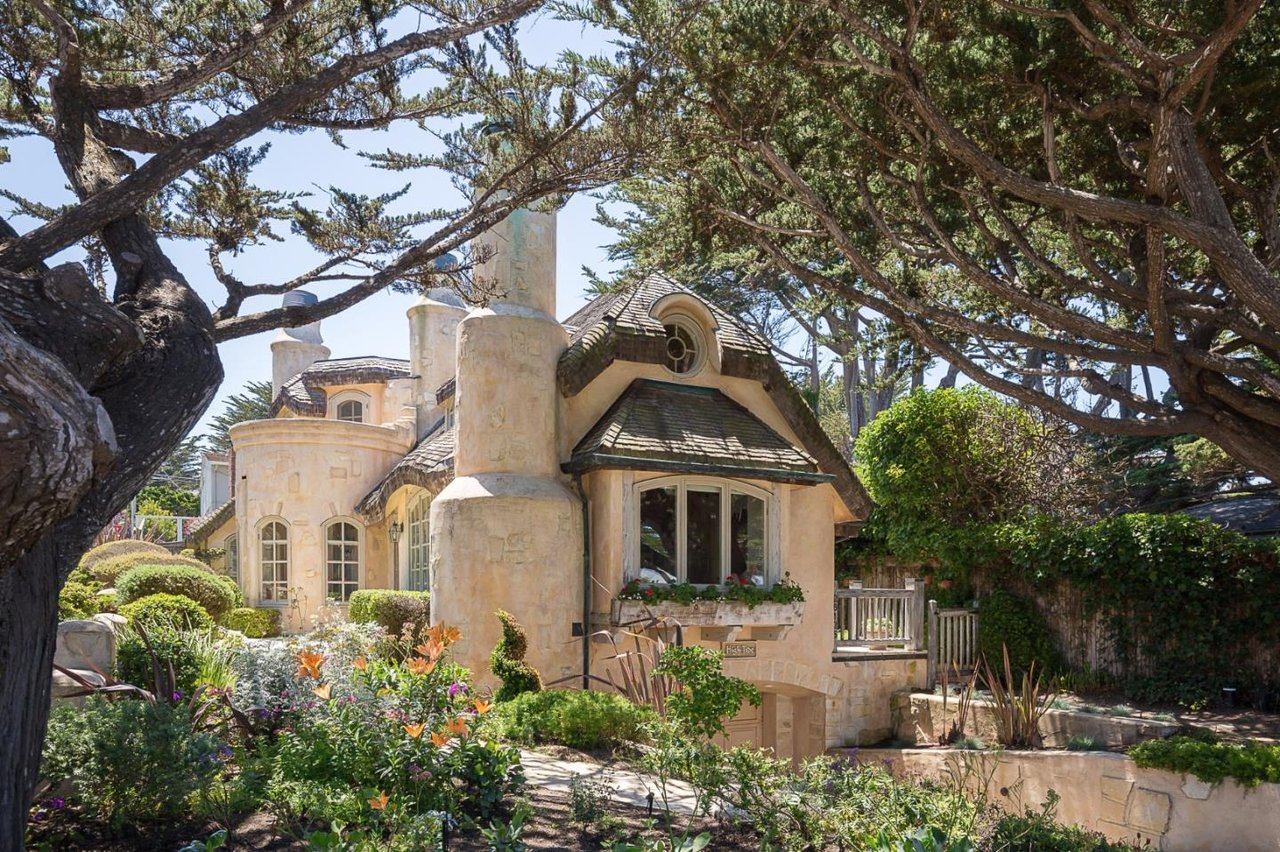
The people fighting hardest for the old system weren't being difficult for its own sake. Many were descendants of the artists who settled the village after the 1906 San Francisco earthquake, and the house names were part of what they'd built there instead of a numbered grid: Hansel, Sea Urchin, Bluebird Cottage. A name on a gate was a claim about what kind of place this was. A number was a claim about what kind of place it wasn't.
The debate found new energy during the pandemic, when remote work and home delivery made an address-free village feel less charming and more inconvenient. Baron began pushing the council to reconsider in the summer of 2021. Local fire and code officials had also been pointing out for years that the absence of house numbers ran against state fire and building code requirements, and that argument only got harder to wave off as the town's population aged. More than half of Carmel's roughly 3,200 residents are over 65, packed into a village that covers about one square mile, and a dispatcher trying to count houses in the dark loses time that matters.
What finally moved the needle wasn't a single dramatic vote. It was two boring ones. On October 7, 2025, the city council voted 5-0 to begin the formal process of identifying an address system. Two months later, on December 2, 2025, it voted 5-0 again to approve implementation.
Behind that second vote was a year of unglamorous committee work. Mayor Pro Tem Bob Delves led a group of residents and city staff that had been studying the problem since April 2025, and the numbering plan they produced had already cleared review by a U.S. Postal Service representative before the council ever saw it. The logic is straightforward once you know it: streets running north to south start with two-digit numbers in the 1 to 99 range near downtown, then progress to three digits and eventually four digits by the time they reach the village's southern border.
That two-vote, no-dissent outcome is worth sitting with, given what came before it. This is a town that once threatened to leave the state over the same basic question. What changed wasn't the argument. It was who was in the room to hear it, and how many of them had spent a pandemic waiting on a delivery truck that couldn't find their door.
The numbers exist mainly for the people and systems that never had a workaround for their absence:
None of that required the village to give up anything it had built its identity around. The city's own materials on the project describe the change with a phrase that gets at exactly this: "CBTS New Numbers. Same Traditions."
Here's what a homeowner in the village still does exactly as before. Mail still goes to the post office, not to a mailbox out front. Residents still need a PO box, and the postal counter still asks property owners to show a current tax bill to prove they're entitled to one, with annual re-verification required. There is still no home mail delivery in Carmel-by-the-Sea, and nothing in the address rollout changes that.
The house names haven't gone anywhere either. Local custom has long held that it's bad luck to rename a Carmel cottage, and that custom didn't get repealed along with the ban on street numbers. A homeowner can now give a delivery service both a number and a name, and most will probably keep doing exactly that, the same way Baron's old direction and a new numeric address can both be true at once.
There's a quieter reason the standoff ran a full century before it resolved. Something like three in four homes in the village function as second residences rather than year-round households, according to reporting the San Francisco Chronicle sourced this year, and the town's median home price has climbed north of $4 million. For an owner who's in town six weeks a year, the absence of a street number was a quirk, not a daily obstacle. For a full-time neighbor waiting on a package or explaining their location to a 911 dispatcher, it was friction they lived with every week. The debate that finally ended in December 2025 was in large part a disagreement between those two kinds of residents, and the side that spends more days a year actually navigating the village won.
If you've lived in Carmel for any length of time, the practical adjustment is smaller than the history might suggest. Your house still has its name, if it has one. Your neighbors still know it by that name. What's different is that the systems built for a modern, numbered world, the ones handling emergency dispatch, package tracking, and code compliance, finally have something to grab onto that isn't a description of a cypress tree.
The village spent a century deciding that a numberless map was worth defending. It spent one committee, two unanimous votes, and about eight months deciding that the map and the map's absence could both exist at the same time. That's the actual story here, and it's a more interesting one than "quaint town finally modernizes." Carmel didn't modernize. It annotated itself, carefully, without erasing anything.
If the address transition has you sorting out what it means for your title records, insurance documentation, or how a property is described for permitting purposes, that's exactly the kind of detail Mike Meza helps clients untangle, whether you're settling into a house that's had the same name for eighty years or just trying to make sure your paperwork matches your gate.

What Buyers and Sellers Need to Know
What the 2026 Market Data Says
Young, energetic, and on the rise, Mike has his sights set on becoming the top real estate agent in the Monterey Peninsula.
Mike Meza | CA DRE# 02007491
[email protected]
831-578-4601
Sotheby's International Realty Inc | CADRE# 00899496
ADDRESS 3775 Via Nona Maria #100 Carmel, Ca 93923